In which, with the clock running down to nothing, Cristiano Ronaldo keeps his ‘one in every hundred’ free-kick success ratio alive by pounding one of his trademark tomahawks into the top-corner from 30 metres rather than into the ribcage of some unlucky sod in the wall…
Considering the time on the clock, you’ll probably be unsurprised to find out that Portugal still lost despite Ronaldo’s late screamer, with goals from Michael Krohn-Deli and Nicklas Bendtner landing the Danes a place at Euro 2012 and nudging Portugal into the play-offs.
Ronaldinho Video: Watch Brazilian Star Bend It Like Beckham vs. Mexico
Ronaldinho's back.
The Brazilian superstar was once considered the best player in the world. He won the 2004 and 2005 FIFA World Player of the Year award during his time with Spanish club Barcelona.
Since that time, Ronaldinho's career has sputtered. He joined AC Milan in 2008, but flamed out, and was sent back to Brazil just a few years later to join Flamengo.
His terrific play with Flamengo has earned him the to get back in the national team picture. He has registered 13 goals in just 23 appearances for the club, and is easily one of the club's best players.
With his club rejuvenation going well, Ronaldinho decided to lead Brazil to a victory in the team's international friendly against Mexico.
With just over 10 minutes to play before stoppage time, Brazil was awarded a free kick just outside the 18-yard box , and allowed Ronaldinho to step up and take the kick.
Ronaldinho didn't disappoint. As you can see in the video above, he curved to ball over the wall, and into the top right corner with perfect placement.
At that point in the game, Mexico was leading 1-0, and Brazil was desperate for an equalizer. They finally got it off the foot of Ronaldinho, and Junior Vieira da Silva Marcelo provided the game winner just minutes later. The victory is more impressive when you consider that Brazil was down to ten-men following a Dani Alves in the 45th minute.
It seemed like the good old days for Ronaldinho, who scored his first International goal since 2008.
Keep an eye out for Ronaldinho, who is looking to make a case to be a part of Brazil's squad for the 2014 World Cup.
We’ve featured a couple of tricky-dicky UNC Asheville ‘keeper Lassi Hurskainen on Pies before, and you’ll be glad to know that the fripperous freestyler has finally gotten around to cobbling together his third showreel – which is based around an ‘Angry Birds’ theme (you know, that infernal iPhone game) for some reason…
14. The Albanian National Team’s Five-Finger Discount
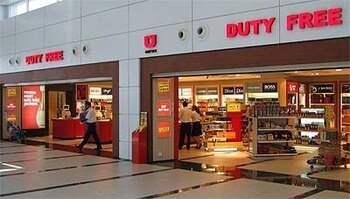
They thought "Duty Free" meant "Free-For-All." In 1990, the Albanian national senior and U21 football teams were on their way to a friendly in Iceland and had a three-hour layover at London's Heathrow Airport. Supposedly confusing the words "duty free" with "all free," the 37 members of the team made off with $3,400 worth of items from the shop without paying for them. As one airport employee was quoted in TIME Magazine: "By the time they got to the gate, there were watches everywhere." Heathrow officials detained 30 of the players, but after logistical problems and failure to find a translator, they decided to call off the investigation. This was likely a classic case of some key words getting lost in translation, in which case you can't really blame the Albanian players. But still, if you're going to walk away with three grand worth of merchandise, it's a good idea to ask.
13. Kuwaiti Football Boss Rushes the Pitch
The 1982 World Cup was a veritable gold mine of crazy officiating decisions, but this one takes the cake for controversy. In a match between France and Kuwait, Les Bleus were up 3-1, and they scored another as their opponents' defenders, who thought they heard the piercing sound of a whistle in the distance, did nothing to stop them. What happened next went into viral sports highlight history. Prince Fahid, the president of the Kuwaiti football governing body, rushed the field and told the national team to leave in protest of the play. The referee, in response, disallowed the goal. France eventually won 4-1, but it's Fahid's attempt to step in and play manager that fans will remember.
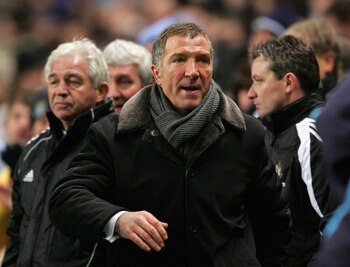
12. Graeme Souness Signs Ali Dia
Clive Mason/Getty Images
It was one of the greatest cons in footballing history. In 1996, Senegalese player Ali Dia, after a string of small-time appearances and failed tryouts, decided to try a little embellishment of the ol' CV to break into the big time in English football.
Desperate for his big break, a friend of Dia's called up Southampton manager Graeme Souness pretending to be the much better, much more well-regarded Liberian international striker George Weah. Weah claimed that Ali Dia was his all-star cousin who had played for Paris Saint-Germain and been capped a number of times for the national team.
The crazy part? Souness bought the story and signed him. But Dia's status as a fraud was quickly revealed when he was used as a substitute for Matt LeTissier in a match against Leeds United and his performance was expectedly terrible. The truth came out, Dia was sacked and weird football history was made.
Souness may have come off as the biggest loser, but Ali Dia made fools of us all.
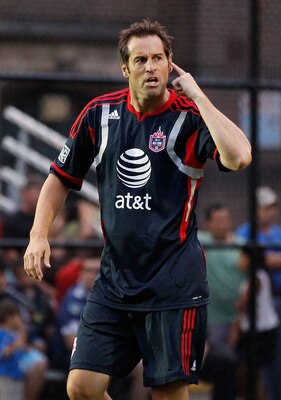
11. John Harkes Gets Cut from Team USA Right Before the '98 World Cup
Mike Stobe/Getty Images
Regarded as one of the greatest Americans to play the game, Harkes was the first Yank to play in the Premiership and a fixture on the U.S. Men's National Team throughout the late 1980s and '90s. In fact, he was such a powerful presence that Team USA Coach Steve Sampson named him "Captain For Life" before the 1998 World Cup. And then, he wasn't.
Sampson pulled Harkes off the roster right before the tournament for reasons that seemed murky at the time, and only later was it revealed that the decision was due to Harkes having an affair with the wife of teammate Eric Wynalda. Like having an affair has everstopped a footballer from performing.
Without their fearless leader, Team USA finished at the bottom of their group stage and Harkes published a tell-all autobiography a year later, appropriately titled Captain For Life: And Other Temporary Assignments. Ouch.
10. Barbados Scores an Own Goal to Advance in a Tournament
It sounds crazy, but it's true and it worked. The Barbados national team scored an own goal to advance in the 1994 Shell Caribbean Cup. In order to advance to the finals, Barbados needed to win by two clear goals. With Grenada closing in and the score 2-1, the Barbadians knew they needed to act fast and that their best option would be to take the match into extra time, where goals count double. So they scored an own goal, scored the winner in overtime and made their way into oddball pitch tactics' history.
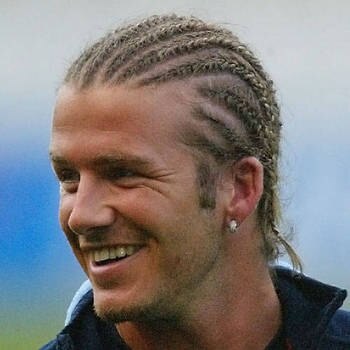
9. David Beckham Gets Cornrows
Come on, you knew this one was coming. There is just no reason this had to happen. Only you can prevent terrible football star hairstyles.
8. Marius Cioara, Kenneth Kristiansen and Food-Related Trades (tie)
Jamie Squire/Getty Images
Apparently, the managers of Vindbjart and UT Arad were really hungry on the days they sold Kenneth Kristiansen and Marius Cioara, respectively. Both players were given to Floey and Regal Hornia for massive amounts of oddly specific foodstuffs.
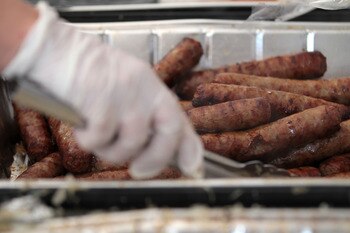
The Norwegian went for his body weight in fresh shrimp, an amount determined with a boxing-style weigh-in, while Cioara went to Romanian side UT Arad for 15 kilos of sausage. The latter humiliated Cioara who, already weary of the mockery he received over the situation, quit the club after a day and moved to Spain to work on a farm. Arad, naturally, asked for their sausages back.
To be fair, we can't blame Cioara for getting upset at only being worth 15 kilos of sausage. We would have asked for some mash or sauerkraut to go with it.
7. Bristol City’s Chimp Tea Party
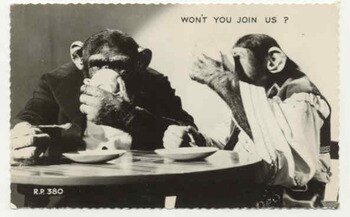
This one's exactly what it says on the tin. The chimpanzee tea party was a popular, albeit cruel, form of entertainment in England throughout most of the 20th century, until it was banned in the 1970s. As one might expect, it involved dressing chimps in human clothes and making them have a tea party. In a promotional stunt designed to drum up attendance, Bristol City staged one of these on the pitch before a match against West Ham United. Isn't paying for the football enough?
6. France Not Sacking Raymond Domenech Before the 2010 World Cup
Clive Rose/Getty Images
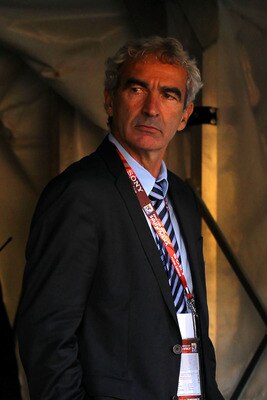
Prior to their trip to South Africa in 2010, the French national football team were hungry for a world championship title after losing out to Italy in the 2006 final. Their manager, Raymond Domenech, already under fire for France's disappointing performance in Euro 2008, had announced he would quit his post after the 2010 World Cup. What's mind-boggling is, given his unfavorable track record, controversial tactics and the French team already in the midst of a PR nightmare after Thierry Henry's handball against Ireland, why he was still in charge of the team before the tournament.
When Domenech arrived with Les Bleus in South Africa, things only got worse. Tensions with Nicolas Anelka boiled over and led to the dismissal of the striker halfway through a match. Subsequently, the team began to fall apart, with players boycotting training in protest of how Domenech handled the situation.
When the team crashed and burned in the end, finishing at the bottom of their group stage, Domenech took the blame. He left his coaching post after the World Cup and was fired from his position on the board of the French Football Federation (FFF) several months later.
5. David Beckham Goes to the L.A. Galaxy
Victor Decolongon/Getty Images
Sometimes, we wonder what the meeting was like when this decision was made: "Let's see if we can shore up American interest in football by bringing over the one footballer most non-football watching Americans can recognize. It totally worked with Pelé!"
To be fair, it did work with Pelé to a certain extent. He drew huge crowds while playing in the U.S., became a household name and the first footballer most Americans could recognize. His last match with the New York Cosmos drew a crowd of 75,000. He ushered in a brief era of American football, bringing in European and South American megastars (albeit past their prime) to drum up interest, including Franz Beckenbauer and George Best.
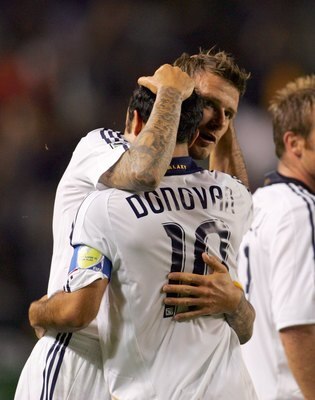
But American soccer is a different game now than it was in the '70s when Pelé arrived and the nature of sports stardom is also different. It's more well-established—the teams have their own stadiums, ultras clubs and the league has a growing niche of fans and its own homegrown stars. Besides, it has been importing big names from Europe and South and Central America for a while now. The move felt like little more than a stunt for both sides, with Beckham and his PR team clearly getting the better end of the deal ($250 million potential earnings over a five-year deal).
For what it's worth, Beckham hasn't given much more to the L.A. Galaxy than a big name on the marquee. He's gone back to play in Europe twice on loan spells to AC Milan and drew the ire of Galaxy fans who called him a "fraud" and a "part-time player." He's rumored to return to Europe next season ahead of the 2012 Olympics, either to a Premiership club (Queens Park Rangers have expressed interest) or Paris Saint-Germain.
Ah, well. It seemed like a good idea at the time.
4. Zinedine Zidane's Headbutt
While there have certainly been more violent acts that have taken place on a football pitch, Zidane's headbutt of Marco Materazzi (who had insulted his sister) in the 2006 World Cup final is certainly the most iconic, and perhaps had more impact than any other on a player's international perception. In fact, when you Google "Zinedine Zidane," "Zinedine Zidane headbutt" is the second thing that comes up after his name. As a result of that action, his subsequent sendoff and France's defeat in the final led to one of the brightest stars of the past several decades decision to retire. Watch the video for a series of rapid-succession edits of the infamous headbutt.
3. Brazil Plays a Sick Ronaldo During the 1998 World Cup Final
Michael Regan/Getty Images
The circumstances surrounding the Brazilian ace's departure from, and then return to, the starting squad for the 1998 World Cup final between Brazil and France remain somewhat mysterious to this day.
The night before, something happened. According to the team doctor, Lidio Toledo, Ronaldo had been taken to the hospital after experiencing a brief seizure in his sleep, but cleared all neurological and cardiac tests. According to his teammate, Roberto Carlos, Ronaldo had an early-morning breakdown because of the pressure and began crying and vomiting.
Whatever the case, it did not appear as though Ronaldo would make it to the final. But half an hour before the match, his name was back on the teamsheet after he arrived at the Stade de France and declared himself fit to play. Not completely up to strength, Ronaldo naturally underperformed, and a Zinedine Zidane-led France got the victory and all the glory.
After the match and France's victory, conspiracy theories began to emerge. He had been poisoned. Romantic struggles had led to his downfall. Nike, a team sponsor, has been implicated in some myths about the match, suggesting the sport retailer's execs encouraged coach Mario Zagalo to play Ronaldo. But whatever the case, and whatever really happened to Ronaldo before the match, putting him out on the pitch was a strange decision.
2. Sepp Blatter Is Still the President of FIFA
Michael Regan/Getty Images
It's not surprising, but it's weird nonetheless.
Given the allegations of corruption, ill-advised decisions (like fraternizing with Robert Mugabe), ire-drawing comments, lack of administrative transparency and unanswered calls for reform, it's pretty remarkable that the guy who oversaw all of it is still in charge of the governing body of international football. What's even crazier is that he ran unopposed in the last FIFA election, after possible competitors dropped at the last minute.
1. Referees Shoots Coach Who Disagrees with Him
Lintao Zhang/Getty Images
The late, great Bill Shankly once said, "Some people believe football is a matter of life and death, I am very disappointed with that attitude. I can assure you it is much, much more important than that." It took a referee, a coach, a dispute and a bullet to prove his point.
This isn't weird as much as it is tragic and awful, but in terms of rather insane and ill-advised officiating decisions, there is truly no equal. At a 2004 match in Kenton-on-Sea, South Africa, the altercation began with a yellow card on a player from Marcelle Club. Players, coaches and fans protested, and the argument quickly grew heated. When it looked like it was going to get out of hand, the referee pulled out a gun and shot the Marcelle coach. The coach died from his wound in the chest, and the same bullet also wounded two players. Police cited self-defense in his actions.
And you thought that offside call was bad.